

The short answer
Medical detox is supervised care while your body withdraws from alcohol or drugs; it is the first stage of treatment, not a cure. Withdrawal from alcohol and benzodiazepines can cause seizures, so never stop either suddenly without a doctor's advice.
In Thailand, ask exactly who runs detox and where: only 3 of the 8 centers in our price survey said their price fully includes it.
What is medical detox, and what isn't it?
Detox treats withdrawal, not addiction: NIDA calls it only the first stage of treatment.[1]
Detox, or medically assisted withdrawal, means stopping a substance under medical care so that withdrawal symptoms are kept as safe and bearable as possible. The US National Institute on Drug Abuse (NIDA) says that on its own it does little to change long-term drug use.[1]
US treatment guidance describes three parts to a complete detox: an assessment, stabilisation through withdrawal, and getting the person ready for and into ongoing treatment.[2] A program that skips the third part leaves the hardest work undone.
Who needs a medically supervised detox?
The risk depends mostly on the substance. Some withdrawals can be life-threatening; others are mainly very unpleasant but carry other dangers. Only a doctor who has assessed you can say which setting is safe for you.
| Substance | Main withdrawal risk | What guidance says |
|---|---|---|
| Alcohol | Seizures and delirium tremens in some dependent drinkers | Hospital admission for people at high risk of seizures or delirium tremens; inpatient or residential detox for some others[4][5] |
| Benzodiazepines (for example diazepam, alprazolam) | Stopping suddenly can cause confusion, psychosis and convulsions | Reduce gradually, with the pace set by a doctor[6][7] |
| Opioids (heroin, painkillers, methadone) | Severe discomfort; overdose if use restarts after tolerance has dropped | Usually community detox; inpatient if there are other health problems or alcohol or benzodiazepines are involved too[8] |
| Stimulants (methamphetamine, cocaine) | Exhaustion, low mood, poor sleep and craving | Supportive care; evidence for medicines is limited[11] |
Scroll sideways to see the full table.
For alcohol, the NHS says withdrawal symptoms usually start 6 to 12 hours after the last drink and typically last 3 to 7 days.[3] UK guidance from NICE suggests inpatient or residential detox, rather than at home, for people who drink more than 30 units a day, who have had seizures or delirium tremens before, or who are withdrawing from alcohol and benzodiazepines at the same time.[4]
For methamphetamine, a 2023 review describes an early "crash" of exhaustion followed by a withdrawal phase of about 2 to 4 weeks. It found the evidence for any medicine to be low to very low quality, so care is mostly supportive.[11] Low mood is part of this withdrawal, so ask how a center watches for it.
What happens during a medical detox?

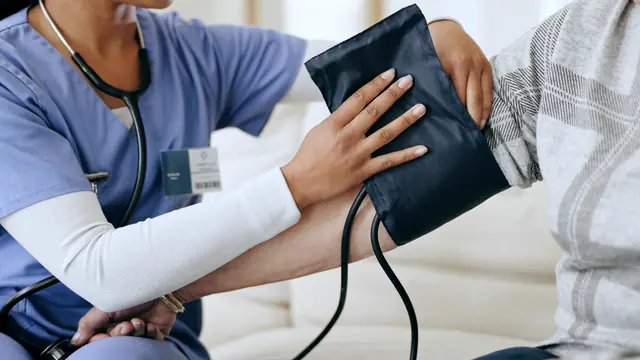
A good detox starts with an assessment: what you use and how much, past withdrawals, physical and mental health, and other medicines. The doctor then decides where withdrawal should happen and what medicines, if any, are needed.[2]
During withdrawal, staff check symptoms regularly and the doctor adjusts treatment as symptoms change. For alcohol, NICE recommends thiamine (vitamin B1) to protect against a serious brain condition linked to heavy drinking.[5]
Which medicines are used, and how much, is a decision for the doctor treating you. This guide does not give doses. What you can check is that a licensed doctor prescribes them and that someone trained is awake and on duty at night.
Is rapid or "painless" detox safe?
NICE says ultra-rapid opioid detox under general anaesthesia or heavy sedation must not be offered, because of the risk of serious harm, including death.[9]
The same guidance says rapid detox that deliberately triggers withdrawal with drugs that block opioids should not be routinely offered either. It needs complex extra medicines and a high level of medical and nursing supervision.[9]
Be wary of any program in Thailand or elsewhere that promises a detox in a day or two, "under sedation" or "without withdrawal". Ask what exactly is done, by whom, and which hospital is responsible if something goes wrong.
Why are the days after detox risky?
After an opioid detox, the body's tolerance falls. The NHS warns that this raises the risk of overdose if the person uses heroin or other drugs again, including benzodiazepines.[8] The World Health Organization lists going back to opioids after detox as a risk factor for overdose.[10]
That is why the plan for after detox matters as much as the detox. For opioids, this may include maintenance medicine such as methadone or buprenorphine, which a doctor can discuss with you. The NHS says a key worker usually keeps supporting someone for at least 6 months after detox.[8]
If you fly home soon after a short detox, line up a doctor or local service at home before you leave. Our guide to what happens in a 28-day rehab shows how detox fits into a full program.
How does detox work at rehabs in Thailand?
Of 8 centers that publish a price on their own website, 3 fully include detox and 5 include it only in part.[12]
"Part" usually means the center manages mild or moderate withdrawal itself and sends severe cases to a hospital, or charges for detox medicines separately. Six of 10 centers whose price pages we read charge for medication separately, and 6 charge separately for hospital or off-site medical care.[12]
Hospital costs can add up. The UK government notes that hospitals in Thailand require a guarantee of payment before treating patients, and that private hospitals can be expensive.[13] Check what your insurance will and won't pay before you travel; our insurance guide explains what to ask.
Government drug-treatment hospitals also run inpatient withdrawal care. Thanyarak Khon Kaen Hospital, for example, publishes separate daily fees for the withdrawal phase, with a higher nursing fee for non-Thai nationals; see the Price Index for what that adds up to.[12]
Taking a prescribed opioid, methadone or a benzodiazepine into Thailand needs a doctor's letter or a Thai FDA permit, depending on the medicine and amount. Our medication guide explains the rules.
Questions to ask a center about detox
Ask for written answers before you pay a deposit or book flights. A good center will answer clearly.
- Is withdrawal managed on site, in a hospital, or both? Ask which cases the center sends to hospital and which hospital it uses.
- Which doctor is responsible, and are they licensed in Thailand? Ask how quickly a doctor can attend at night.
- Who is on duty overnight during detox? Ask whether a nurse is awake and on site, and how often symptoms are checked.
- Do you take people withdrawing from alcohol or benzodiazepines? If the center says no, or says it can handle any case without a hospital, ask why.
- What does detox cost if it goes beyond the package? Get the price of medicines, extra doctor visits and a hospital stay, and ask who pays the hospital guarantee.
- What happens after detox? Ask about the therapy plan, any maintenance medicine, and support after you go home.
Our checklist on whether rehab in Thailand is safe shows how to check a center's licence yourself.
Frequently asked questions
How long does medical detox take?
It depends on the substance, how much and how long it was used, and the person's health. For alcohol, the NHS says withdrawal symptoms usually start 6 to 12 hours after the last drink and typically last 3 to 7 days. A supervised opioid detox in the community can take up to 12 weeks, and benzodiazepines are usually reduced slowly over weeks or months.
Can I detox at home before I fly to Thailand?
Don't stop alcohol or benzodiazepines suddenly on your own: withdrawal from either can cause seizures. Talk to your doctor before you change anything. They can tell you whether it is safer to detox at home with support, in a local hospital, or at the center after you arrive, and whether you are fit to fly.
Is detox included in the price of rehab in Thailand?
Often only in part. In our October 2026 Price Index, 3 of the 8 centers that publish a price said detox was fully included and 5 included it only in part, for example by sending severe cases to hospital or charging for medicines. Ask for the cost of a hospital stay in writing.
Is rapid detox under anaesthesia safe?
UK guidance from NICE says ultra-rapid opioid detox under general anaesthesia or heavy sedation must not be offered, because of the risk of serious harm, including death. Treat any center that advertises it as a reason to look elsewhere.
Is detox enough on its own?
No. The US National Institute on Drug Abuse says medically assisted detox is only the first stage of treatment and by itself does little to change long-term drug use. Plan the next step, therapy, medication or both, before detox starts.
Sources
- National Institute on Drug Abuse (NIDA) (third edition, revised January 2018). Principles of Drug Addiction Treatment: A Research-Based Guide. Principles of effective treatment
- Substance Abuse and Mental Health Services Administration (SAMHSA) (2006). Detoxification and Substance Abuse Treatment (Treatment Improvement Protocol 45)
- NHS (reviewed 24 April 2026). Alcohol-use disorder
- National Institute for Health and Care Excellence (NICE) (2011, updated 2014). Alcohol-use disorders: diagnosis, assessment and management of harmful drinking (high-risk drinking) and alcohol dependence (CG115)
- National Institute for Health and Care Excellence (NICE) (2010, updated 2017). Alcohol-use disorders: diagnosis and management of physical complications (CG100)
- NHS (reviewed 2 June 2026). Diazepam
- NHS Scotland, Right Decisions (2026). Polypharmacy guidance 2026–2029: benzodiazepines and z-drugs
- NHS (accessed 13 October 2026). Heroin addiction: get help
- National Institute for Health and Care Excellence (NICE) (2007). Drug misuse in over 16s: opioid detoxification (CG52). Recommendations. Recommendations 1.3.3.1 to 1.3.3.4
- World Health Organization (accessed 13 October 2026). Opioid overdose (fact sheet)
- Acheson LS, Williams BH, Farrell M, McKetin R, Ezard N, Siefried KJ. Drug and Alcohol Review 42(1): 7–19 (2023). Pharmacological treatment for methamphetamine withdrawal: a systematic review and meta-analysis of randomised controlled trials
- Thai Recovery Guide (11 October 2026). Thailand Rehab Price Index 2026. Inclusions read from the price pages of centers that publish prices; centers are not named
- UK Foreign, Commonwealth & Development Office (accessed 11 October 2026). Thailand travel advice: health
Checked on 13 October 2026. This page describes detox in general terms and is not medical advice: decisions about withdrawal, medicines and whether you are fit to travel belong with a doctor who has assessed you.
Related guides

Need help right now?
If you are in immediate danger, call your local emergency number. Stopping alcohol or some drugs suddenly can be dangerous, so get medical advice first. These lines are free to call.
In Thailand
- Emergency medical services 1669 Thailand, 24 hours
- Department of Mental Health hotline 1323 24 hours, Thai language
- Police 191 Thailand
- Tourist Police 1155 English spoken