

The short answer
Rehab in Thailand can be safe when the center is a licensed medical facility, a doctor manages withdrawal and there is a hospital it can transfer patients to. The main risks come from unlicensed "retreats", detox without medical staff and pressure to pay before anyone has assessed the patient.
You can check a private facility's licence yourself on the Ministry of Public Health's online register, and this page shows you how.
How are rehab centers in Thailand licensed?
There is no single "rehab licence" in Thailand. A private treatment center is first of all a medical facility under the Medical Facility Act B.E. 2541 (1998), often translated as the Sanatorium Act, which has been amended several times since, most notably in 2016.[1][2] Two licences matter:
- A licence to run the facility. No one may operate a medical facility without one.[1] It records the facility's name and location, and that is the name you should search for.[2]
- A licence to manage it. The person in charge must hold a separate licence and be a licensed health professional, such as a doctor or nurse, able to supervise the facility closely.[1]
The licensee must display the licence, the names of the practitioners who work there, the fees and patients' rights where patients can see them.[1] The Ministry of Public Health's Department of Health Service Support keeps the online register of licensed private facilities.[3]
The regulator does act. In October 2026 it revoked the licence of a care home in Kanchanaburi province, licensed for elderly care, after inspectors found psychiatric patients kept in enclosed beds and rooms locked from the outside.[4]
Extra rules for drug treatment
Under Thailand's 2021 Narcotics Code, treating drug addiction as a regular business outside a recognised facility can bring up to 3 years in prison.[6]
The Code says drug treatment, paid or unpaid, may only be given as a regular business in a drug-treatment facility or rehabilitation center recognised under the Code; free education, counselling and advice are exempt.[5] If your family member uses illegal drugs or misuses prescription drugs, ask the center for written proof that it may treat drug addiction, not only a facility licence.
We could not find a public list of recognised private drug-treatment facilities. If a center's answer is unclear, ask the Provincial Public Health Office for the province where it is based.
How can a family check a licence?
Ask the center for a scan of both licences before you pay anything. Then check the details yourself; it takes a few minutes.
- Open the register. The Department of Health Service Support's private facility check is at hosp.hss.moph.go.th. It is in Thai, so a browser translation tool helps.[3]
- Search by licence number or facility name. Results show the name, address, licence type, operator, medical staff and current licence status.[7]
- Compare every detail. The name and address should match the center's website, contract and invoice. A center's English brand name may differ from the legal name on its licence, so ask which name to search for.
- Check the doctor. Ask for the full name of the doctor responsible for medical care. The Medical Council of Thailand runs a public search of registered doctors on its website, in Thai.[8]
If the center doesn't appear, the licence has expired or the center won't share it, walk away. The Medical Council of Thailand gave the same warning for clinics in April 2026: if no record appears, the facility may not be authorised to operate.[7]

Do HA, CARF or other accreditations matter?
A licence is the legal minimum. Accreditation is an extra check of quality by an outside body; it is worth asking about, but it doesn't replace a licence.
- HA (Hospital Accreditation) is Thailand's national scheme, run by the Healthcare Accreditation Institute. Its website lets you search certified facilities and see the certificate level, start date and expiry date.[9]
- CARF describes itself as an independent, non-profit accreditor of health and human services, including behavioural health. Its "Find a provider" tool lists accredited programs.[10]
- Hospital accreditations such as JCI. If a center mentions one, check whether it belongs to the center itself or to a hospital it works with.
Always confirm an accreditation on the accreditor's own website, with its expiry date. A logo on a center's website proves nothing by itself.
Is medical detox in Thailand safe?
Withdrawal is the riskiest stage for some people. The NHS warns that it can be very dangerous to stop drinking suddenly if you are dependent on alcohol, and withdrawal can include hallucinations, confusion and seizures.[11] Benzodiazepines such as diazepam also need to be reduced gradually by a doctor, because stopping suddenly causes withdrawal symptoms.[12]
So the question is not whether a center offers "detox" but who runs it. Ask for written answers to these:
- Is withdrawal managed on site or in a hospital, and which doctor is responsible?
- Are nurses on duty overnight, and how quickly can a doctor attend?
- Which hospital does the center use in an emergency, how far away is it, and how does the patient get there?
- Who pays the hospital? The UK government notes that hospitals in Thailand require a guarantee of payment before treating patients, and that private hospitals are of a high standard but can be expensive.[13]
Thai law requires a licensed facility to give emergency care to a patient in danger and to arrange a transfer when needed.[1] A business running without a licence sits outside that system altogether.
Red flags: when to walk away
- No licence you can check. The center won't share its licence, or the details don't match the register.
- A "retreat" offering detox. A wellness or retreat business that promises to manage alcohol or drug withdrawal without a doctor and nurses.
- No named doctor and no assessment. You are offered a bed before anyone has asked about drinking, drug use, medicines and health conditions.
- Pressure to pay. "Today only" discounts, a large non-refundable deposit before any assessment, or no written contract and refund policy.
- Promises of a cure. Thai law bans false or exaggerated claims in medical-facility advertising.[2] Guaranteed results are a warning sign.
- Forced or locked treatment. Offers to collect someone against their will, locked rooms, restraint, or holding passports and phones with no clear written policy.
- No hospital plan. The center can't name the hospital it uses or explain how emergencies are handled.
How much can you trust rehab reviews?
Reviews help, but read them with care. Testimonials on a center's own website are chosen by the center, and directories that show ratings may be paid by the centers they list, so check how a site makes money before trusting its rankings.
- Look for detail: dates, the program, what went well and what didn't. Short, vague five-star reviews tell you little.
- Read the negative reviews and the center's replies, which show how it handles complaints.
- Compare several sites rather than relying on one.
- Check that a "verified" badge comes from an organisation you can look up, and when it last checked.
- Remember that no review can tell you whether a center is licensed. Check that yourself.
Is Thailand safe to travel to for treatment?
Governments publish travel advice for Thailand, including areas they advise against visiting. Read your government's advice before you book and again before you fly.
When we checked on 11 October 2026, the UK government advised against all but essential travel to parts of the far south near the Malaysian border and to areas within 20 km of the land border with Cambodia.[14] The English-speaking centers we know of are in other regions, such as Chiang Mai, Phuket and the outskirts of Bangkok, but check any center's location against the latest advice.
- UK: FCDO travel advice for Thailand
- Australia: Smartraveller: Thailand
- US: State Department travel advisory for Thailand
- Canada: Travel advice and advisories for Thailand
Before you go, check that your travel insurance covers emergencies during the stay (our insurance guide explains common exclusions). Give a family member the center's address and the hospital it uses, and complete the free digital arrival card explained in our visa guide.
What should you do if something goes wrong?
- If anyone is in danger, call 1669 for an ambulance, 191 for the police, or the Tourist Police on 1155, who speak English.
- Contact the embassy. Consular staff can pass information to family with the person's consent and give details of local lawyers and interpreters, but they can't pay bills or give legal advice.[15] Embassies in Bangkok: UK, Australia, US, Canada.
- Call your insurer's emergency line if you have travel insurance, ideally before agreeing to hospital treatment.
- Report the facility. Concerns about a medical facility, or a business treating patients without a licence, can go to the Department of Health Service Support or to the Provincial Public Health Office where the center is.[2][3]
- Keep records: the contract, receipts, messages, medical reports and discharge papers. You will need them for refunds, insurance claims or complaints.
The family checklist
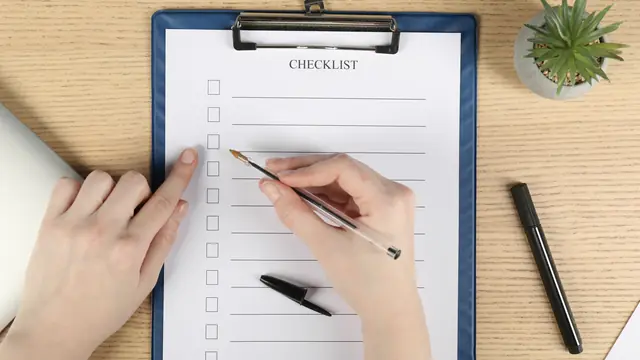
Work through this before you pay a deposit or book flights.
- Facility licence found on the Department of Health Service Support register, with matching name and address
- Name of the licensed manager and of the doctor responsible for care
- If drugs are involved: written proof the center may treat drug addiction under the Narcotics Code
- Any accreditation checked on the accreditor's website, with its expiry date
- A written withdrawal plan: where, who supervises it, and overnight cover
- The emergency hospital's name, distance and who pays
- A medical assessment before admission
- A written contract with the full price, deposit and refund policy
- The policy on leaving early, phones and passports
- Travel advice checked for the center's location
- Travel insurance and embassy details saved
- Medication rules checked in our medication guide
Frequently asked questions
Is rehab in Thailand safe?
It can be, if the center is a licensed medical facility, a doctor is responsible for withdrawal and the center has a clear plan for getting patients to hospital. Most of the risk sits with unlicensed retreats and centers that skip a medical assessment. Check the licence yourself before you pay a deposit.
How do I check if a rehab in Thailand is licensed?
Ask the center for its facility licence number and legal name, then search for it on the Department of Health Service Support register at hosp.hss.moph.go.th (in Thai). The result shows the facility's name, address, licence type, operator, medical staff and licence status. If you can't find it, or the details don't match, don't book.
Are online reviews of Thai rehabs reliable?
Some are, but reviews can't tell you whether a center is licensed or whether detox is medically supervised. Read detailed and negative reviews across several sites, check who issued any "verified" badge, and confirm the licence yourself.
Does a rehab need HA or CARF accreditation?
No. The legal requirement is a facility licence. HA (Thailand's national hospital accreditation) and international schemes such as CARF are extra quality checks. If a center claims one, look it up on the accreditor's website and note the expiry date.
What if my family member wants to leave the center?
Ask before booking, in writing, how the center handles a wish to leave early: refunds, medical advice, and how the person would get to a hospital, hotel or airport. If anyone is held against their will, call the Tourist Police on 1155 or the police on 191, and contact their embassy.
Who do I call in an emergency in Thailand?
Call 1669 for emergency medical help, 191 for the police, or the Tourist Police on 1155, who speak English. See our crisis help page for more numbers.
Sources
- Thailand Law Forum (unofficial translation) (Act of 1998). Sanatorium Act B.E. 2541. Sections 16, 24–25, 31–32 and 36. The Act has since been amended, including by Act No. 4 B.E. 2559 (2016)
- Tilleke & Gibbins (9 September 2026). Court Judgment Reaffirms Rules on Advertising of Medical Facilities in Thailand
- Department of Health Service Support, Ministry of Public Health (accessed 11 October 2026). Private health facility check system (in Thai)
- Thai Examiner (7 October 2026). Care centre closed in Kanchanaburi where patients were locked into caged beds. News report; the facility was a care home, not a rehab
- Narcotics Code B.E. 2564 (2021). Part 2, Title 5: offences relating to drug treatment, sections 121–123 (Thai text). Unofficial online compilation of the Thai statute
- Narcotics Code B.E. 2564 (2021). Part 3, Title 11: penalties relating to drug treatment, sections 181–184 (Thai text). Unofficial online compilation of the Thai statute
- Pattaya Mail (29 April 2026). Thailand urges public to check clinic licenses online to avoid illegal treatment risks. Reports the Medical Council of Thailand's advice
- Thai PBS (11 June 2020). Medical Council advises checking whether a doctor is real before treatment (in Thai)
- Healthcare Accreditation Institute (Public Organization) (accessed 11 October 2026). Certificate status: find a certified healthcare facility
- CARF International (accessed 11 October 2026). Find a provider
- NHS (reviewed 24 April 2026). Alcohol misuse: treatment
- NHS (reviewed 2 June 2026). Diazepam
- UK Foreign, Commonwealth & Development Office (accessed 11 October 2026). Thailand travel advice: health
- UK Foreign, Commonwealth & Development Office (updated 28 September 2026). Thailand travel advice
- UK Foreign, Commonwealth & Development Office (31 August 2022). Consular assistance: how the FCDO provides support
Legal points are summarised from the statutes and official registers listed, not legal advice. English translations of Thai laws are unofficial. We have not yet visited centers in person.
Related guides


Need help right now?
If you are in immediate danger, call your local emergency number. Stopping alcohol or some drugs suddenly can be dangerous, so get medical advice first. These lines are free to call.
In Thailand
- Emergency medical services 1669 Thailand, 24 hours
- Department of Mental Health hotline 1323 24 hours, Thai language
- Police 191 Thailand
- Tourist Police 1155 English spoken