

The short answer
Aftercare is the support that continues once a rehab program ends, and it matters because most people need at least 3 months of treatment, longer than a typical 28-day stay in Thailand.
Arrange appointments at home before you fly, and if you have used opioids, know that lower tolerance after detox raises the risk of overdose.
What is aftercare after rehab?
Aftercare, also called continuing care, is everything that follows a residential or intensive program. It usually combines several kinds of support:
- Talking therapy. Regular counselling or group sessions, in person near home or online.
- Medical follow-up. A doctor who knows your history, reviews any medicines and checks physical and mental health.
- Mutual-help groups. Free peer groups such as Alcoholics Anonymous and other 12-step or non-12-step groups.
- Practical support. Help with housing, work, money and relationships.
The US Substance Abuse and Mental Health Services Administration (SAMHSA) describes recovery in four areas: health, a stable and safe home, purpose in daily life, and a supportive community.[4] A good aftercare plan covers all four, not only therapy appointments.
Why does aftercare matter so much?
NIDA says most people with drug addiction need at least 3 months in treatment to reduce or stop their use significantly.[1]
The same guide says longer treatment tends to give better results, and that the right length depends on each person's problems and needs.[1] A 28-day program abroad is a strong start, but it covers only part of that time.
NIDA compares relapse after addiction treatment with the return of symptoms in other long-term conditions such as high blood pressure and asthma. It says relapse does not mean treatment has failed; it means treatment should be restarted or changed.[2]
The research on continuing care is encouraging but modest. A 2014 review of 19 controlled trials found that continuing care had a small but significant benefit, both when it ended and at later follow-up.[3]
What should you arrange before leaving Thailand?
The last week of a program is the time to make the plan concrete. Ask the center for these before you fly, ideally in writing:
- A discharge summary in English: diagnoses, treatment received, medicines and any test results
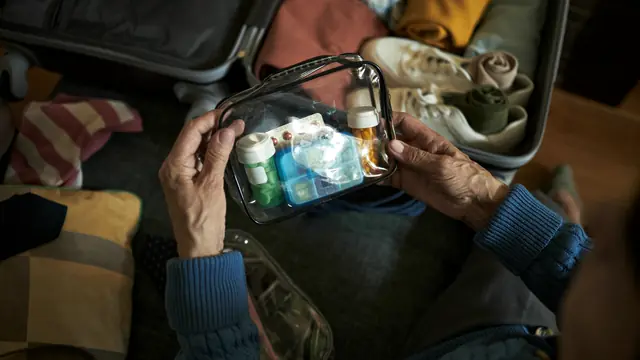
- A list of current medicines, with the prescriber's name, and enough supply to last until your first appointment at home
- A first appointment booked at home with a GP, doctor or local service, ideally in the first week back
- The name of a counsellor or group you will see regularly, in person or online
- A written relapse prevention plan: your warning signs, triggers and who you will call
- Details of any online aftercare the center provides: how many sessions, for how long and whether it is included in the price
- Who meets you at the airport, where you will stay, and what has been removed from the home
- For opioid users: advice from a doctor about naloxone and overdose risk before you leave
In our October 2026 review, many English-speaking centers in Thailand advertised online aftercare after discharge, from check-in calls to months of video sessions.[12] The content and length vary, so compare what is actually offered rather than the label. If you take prescription medicines home, check your own country's rules for carrying them.
What helps in the first weeks home?

The first weeks back are often the hardest. The structure of the program has gone, while the people, places and stresses linked to drinking or drug use are back in reach.
- Keep a daily routine. Regular sleep, meals, exercise and fixed times for appointments or groups replace the timetable of the program.
- See someone regularly. Book appointments before you fly, so there is no gap between leaving the center and starting support at home.
- Go to groups early. A 2020 Cochrane review found that structured programs helping people take part in Alcoholics Anonymous led to higher rates of continuous abstinence than other established treatments.[8] Non-12-step groups exist too, if that approach doesn't suit you.
- Ask about relapse prevention medicines for alcohol. For moderate or severe alcohol dependence, NICE says a doctor should consider acamprosate or oral naltrexone after withdrawal, together with talking therapy.[7] Only a doctor can decide whether either suits you.
- Plan for high-risk moments. Work events, holidays, family gatherings and old friends can all be triggers. Decide in advance what you will do and whom you will call.
Why is overdose risk higher after rehab?
After detox, the body loses its tolerance to opioids. The NHS warns that this makes overdose more likely if someone takes heroin again, especially combined with other drugs such as benzodiazepines.[5] A dose that someone used to take before treatment can now be dangerous.
The World Health Organization recommends that naloxone, a medicine that can reverse an opioid overdose, be available to people likely to witness one, together with training in how to use it.[6] Ask a doctor or local drug service at home how to get naloxone, and make sure family members know where it is kept.
Where can you find support at home?
Free or low-cost support exists in most countries. Start looking before you leave Thailand, so the first appointment is already booked.
| Country | Where to start | What to know |
|---|---|---|
| UK (England) | Your GP, or a local drug and alcohol service | A GP can refer you; you can also approach your local service yourself, though some areas need a referral.[9] |
| Australia | Your GP, or Counselling Online | Counselling Online offers free, confidential online counselling for alcohol and drug use, 24 hours a day, funded by the Australian Government.[10] |
| United States | Your doctor, or FindTreatment.gov | SAMHSA's locator lists treatment services by location, type of care and payment accepted, including insurance.[11] |
| Anywhere | Mutual-help groups | Free; many groups also meet online, so you can try one from Thailand before you leave. |
Scroll sideways to see the full table.
On the NHS route in England, a key worker usually keeps supporting people after a heroin detox for at least 6 months.[5] If you are in the UK or Australia, our country guides for UK residents and Australians explain how treatment abroad fits with services at home.
What if you slip or relapse?
A slip is a warning sign, not the end of recovery. NIDA says a return to use means treatment should be restarted or adjusted, not that it has failed.[2]
- Be safe first. If you have used opioids or mixed drugs, don't use alone and keep naloxone nearby. If you are dependent on alcohol again, don't stop suddenly without medical advice: the NHS warns this can be very dangerous.[13]
- Tell someone. Call the person named in your relapse prevention plan, your counsellor or your sponsor.
- Get back to support quickly. Book a doctor's appointment, go to a group the same day if you can, and contact your aftercare team.
- Review the plan. Work out what led to the slip and what needs to change, such as more frequent sessions, a medicine review or a different living situation.
Families can help most by staying calm, keeping communication open and getting support of their own. Our guide to helping a loved one go to rehab covers the return home from the family's side.
Frequently asked questions
What is aftercare after rehab?
Aftercare, also called continuing care, is the support that follows a residential or intensive program: counselling or group therapy, medical follow-up, mutual-help groups and practical help with housing, work and relationships. It carries the skills from rehab into daily life at home.
How long should aftercare last?
There is no fixed rule. The US National Institute on Drug Abuse says most people need at least 3 months in treatment to reduce or stop drug use significantly, and longer treatment tends to give better results. A 28-day stay abroad covers only part of that, so plan support at home for months, not weeks.
Is it dangerous to use again after rehab?
It can be. After a detox from opioids such as heroin, tolerance falls, so a dose someone used to take can now cause an overdose. The NHS warns the risk is higher if heroin is combined with other drugs such as benzodiazepines. Ask your doctor or local drug service about naloxone before you travel home.
Do Thai rehab centers offer aftercare?
Many English-speaking centers in Thailand advertise online aftercare, such as video sessions or check-in calls after discharge. What is included, how long it lasts and who runs it varies a lot, so ask for the details in writing before you book.
Can I get free aftercare at home?
Often, yes. In England, you can ask your GP or contact a local drug and alcohol service directly. In Australia, Counselling Online offers free 24-hour online counselling for alcohol and drug use. In the US, SAMHSA's FindTreatment.gov lists treatment services by location and payment type. Mutual-help groups are free everywhere.
What should families do when someone comes home from rehab?
Agree the plan before the flight: who meets them, where they will stay, the first appointments and what happens if they start using again. Support the routine rather than policing it, and look after your own support too. Our guide to helping a loved one go to rehab covers the family side.
Sources
- National Institute on Drug Abuse (NIDA) (third edition, updated 2018). Principles of Drug Addiction Treatment: A Research-Based Guide
- National Institute on Drug Abuse (NIDA) (accessed 15 October 2026). Drugs, Brains, and Behavior: The Science of Addiction. Treatment and Recovery
- Blodgett JC, Maisel NC, Fuh IL, Wilbourne PL, Finney JW (2014). How effective is continuing care for substance use disorders? A meta-analytic review. Journal of Substance Abuse Treatment 46(2): 87–97
- Substance Abuse and Mental Health Services Administration (SAMHSA) (2012). SAMHSA's working definition of recovery
- NHS (accessed 15 October 2026). Heroin addiction: get help
- World Health Organization (accessed 15 October 2026). Opioid overdose (fact sheet)
- National Institute for Health and Care Excellence (NICE) (2011, updated 2014). Alcohol-use disorders: diagnosis, assessment and management of harmful drinking (high-risk drinking) and alcohol dependence (CG115)
- Kelly JF, Humphreys K, Ferri M (2020). Alcoholics Anonymous and other 12-step programs for alcohol use disorder. Cochrane Database of Systematic Reviews, CD012880
- NHS (accessed 15 October 2026). Drug addiction: getting help
- Australian Government Department of Health (accessed 15 October 2026). Counselling Online
- Substance Abuse and Mental Health Services Administration (SAMHSA) (accessed 15 October 2026). FindTreatment.gov
- Thai Recovery Guide (October 2026). Review of English-speaking residential centers' published programs and prices. Centers are described, not named, in line with our editorial policy
- NHS (reviewed 24 April 2026). Alcohol misuse: treatment
Official pages were checked on 15 October 2026 through search results from the publishers' own websites, because they could not be opened directly from our research environment. This page describes aftercare in general terms and is not medical advice: decisions about medication and withdrawal belong with your doctor.
Related guides



Need help right now?
If you are in immediate danger, call your local emergency number. Stopping alcohol or some drugs suddenly can be dangerous, so get medical advice first. These lines are free to call.
In Thailand
- Emergency medical services 1669 Thailand, 24 hours
- Department of Mental Health hotline 1323 24 hours, Thai language
- Police 191 Thailand
- Tourist Police 1155 English spoken