

The short answer
Dual diagnosis means living with a substance use problem and a mental health condition, such as depression, anxiety, PTSD, ADHD or bipolar disorder, at the same time. Health agencies in the US and UK say both should be assessed and treated together, so a program in Thailand needs real psychiatric care: a psychiatrist, a medication plan and a crisis plan.
If someone is at immediate risk of suicide, or is psychotic or manic, get care at home first; travel can wait.
What does dual diagnosis mean?
In the US, 35% of adults with a mental disorder also have a substance use disorder, according to 2023 survey data cited by the National Institute on Drug Abuse (NIDA).[1]
"Dual diagnosis" is the everyday term; health agencies usually say co-occurring disorders. It means a substance use disorder, involving alcohol or drugs, alongside a mental health condition.
NIDA lists anxiety, depression, post-traumatic stress disorder (PTSD), ADHD, bipolar disorder, psychosis and some personality disorders among the conditions that often occur with substance use.[1] Either can come first: people may use alcohol or drugs to ease anxiety, stress or low mood, while substance use can trigger or worsen mental health symptoms.[1]
Shared risks such as trauma, chronic stress and inherited traits play a part too.[1] That is why a careful assessment, repeated once withdrawal is over, matters more than a label given on the first day.
Why does integrated treatment matter?
NIDA says it is usually better to treat the two conditions at the same time rather than separately, and that integrated treatment leads to better health outcomes.[1] The US Substance Abuse and Mental Health Services Administration (SAMHSA) links integrated care with less substance use, better psychiatric symptoms and functioning, and fewer hospital stays.[2]
In the UK, NICE says people with severe mental illness or psychosis should not be turned away from mental health services because of their substance use, or from addiction services because of their diagnosis.[3][4] Its PTSD guideline says people should not be excluded from treatment only because they also misuse drugs or alcohol.[5]
Integrated does not always mean doing everything at once. For depression or anxiety alongside an alcohol problem, NICE advises treating the drinking first, as that alone may improve them a lot, and then assessing symptoms that continue after 3–4 weeks without alcohol.[6]
In practice, look for one team with one plan: doctors and therapists who talk to each other, review your progress together and plan your discharge together.
What do common combinations need?
Every person is different, but some combinations need specific skills. Use this table as a guide to what to look for, not as a treatment plan.
| Alongside addiction | What a program should offer |
|---|---|
| Depression or anxiety | Screening for suicide risk at admission, a reassessment after withdrawal, talking therapy such as CBT, and a doctor who can review or start medication[6] |
| PTSD and trauma | Therapists trained in trauma-focused CBT or EMDR, the therapies NICE recommends for PTSD, plus help managing substance use so you can take part safely[5] |
| ADHD | A psychiatrist experienced in adult ADHD. Check whether your ADHD medicine is a controlled drug in Thailand: some controlled medicines need a Thai FDA permit, applied for in advance.[7] |
| Bipolar disorder or psychosis | Psychiatrist-led care, close monitoring of mood and medication, and fast access to a psychiatric hospital. NICE says a planned detox for someone with psychosis should be done as an inpatient.[4] |
Scroll sideways to see the full table.
What does a dual diagnosis program need?

Many centers say they treat dual diagnosis. These are the things that show whether a program can actually do it:
- A psychiatrist, not just counsellors. Ask who the psychiatrist is, whether they are licensed in Thailand, whether they are on site or visiting, and how often you will see them.
- A full assessment. Mental health, substance use, physical health and suicide risk should be assessed at admission, and screening for one condition should prompt screening for the other.[1]
- Medication management. A doctor prescribes and reviews medicines, staff store and give them safely, and any change is explained to you. Don't stop psychiatric medicines to "start clean": the NHS warns against stopping antidepressants suddenly or without talking to your doctor.[8]
- A written crisis plan. NICE expects care plans to include crisis and contingency plans, including for suicide risk and accidental overdose.[3] Ask what staff do at 3am if you feel unsafe, and which hospital they use.
- Therapy matched to the condition. For example, trauma-focused therapy for PTSD rather than general group sessions alone.[5]
- A handover home. A discharge summary for your doctors, and appointments booked with a psychiatrist or mental health team at home before you leave.
When is care at home safer than travelling?
A residential program abroad is planned care, not an emergency service. Get help at home first, and postpone travel, if any of these apply:
- Suicide risk. Thoughts of suicide with a plan, or a recent suicide attempt or serious self-harm.
- Psychosis or mania. Hearing or seeing things others don't, beliefs out of touch with reality, or days of little sleep with racing thoughts and risky behaviour.
- Severe depression. Not eating or drinking enough, or being unable to manage basic self-care.
- A high-risk detox. For example, alcohol or sedative withdrawal in someone with psychosis, which NICE says should happen in an inpatient setting.[4]
- Medication that hasn't settled. A psychiatric medicine was started or changed recently and you don't yet know how it suits you.
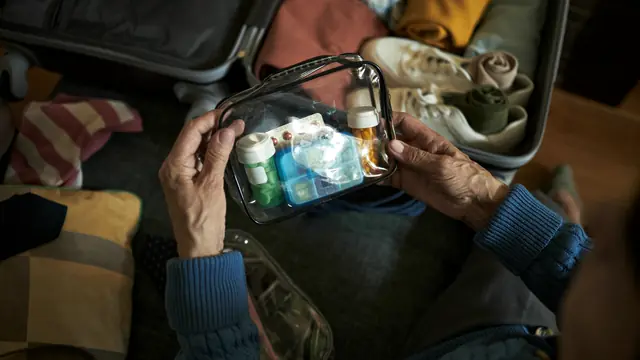
- A medicine you can't take with you. Some controlled medicines need a Thai FDA permit, applied for at least 2 weeks ahead.[7] If your medicine can't be brought in, plan any change with your doctor first.
Ask the psychiatrist who knows you best whether travel is safe now, and get the advice in writing for the center. A long flight, jet lag and an unfamiliar place are hard on anyone who is unwell.
What dual diagnosis care is available in Thailand?
In our October 2026 review of English-speaking centers' published information, many listed depression, anxiety or trauma alongside addiction, and several advertised a dual diagnosis program.[9]
Clinical set-ups differ. In our review, one center was run by a psychiatrist and another was affiliated with a private hospital group; for the rest, ask exactly how psychiatric care is arranged.[9] One center recommended 90 days for dual diagnosis.
Published prices for residential programs are about US$4,300–25,700 per 28–30 days. If a center recommends 8–12 weeks, ask for the total price, as some offer discounted longer packages, and check whether psychiatrist visits and medication cost extra.[9]
Read more in our cost guide and our overview of rehab in Thailand.
What should you ask a center before you pay?
Ask for written answers before you pay a deposit or book flights. A good center will answer clearly, including about who it can't help.
- Who is the psychiatrist, and how often will I see them? Ask for their name and Thai medical licence, and whether they are on site, visiting or based at a partner hospital.
- How do you assess mental health, and when do you reassess? Ask what happens in the first 48 hours and again after withdrawal.
- Who manages medication? Ask whether you can keep taking your current medicines, who can change them and what they need from your doctor at home.
- What is your crisis plan? Ask how staff respond to suicidal thoughts, self-harm, psychosis or mania, who is on duty at night and which hospital you would go to.
- Which therapies do you use for my condition, and who delivers them? For PTSD, for example, ask about trauma-focused CBT or EMDR and the therapist's training.
- Who is this program not right for? A good center will tell you when someone needs a hospital instead.
- How will you hand over to my doctors at home? Ask for a discharge summary and help booking follow-up appointments before you fly.
Our guide to choosing a rehab in Thailand covers licences, detox and contracts.
Frequently asked questions
What does dual diagnosis mean?
It means having a substance use disorder, involving alcohol or drugs, and a mental health condition at the same time. Health agencies usually call it co-occurring disorders.
Common combinations include addiction with depression, anxiety, PTSD, ADHD, bipolar disorder or psychosis.
Should the addiction or the mental health condition be treated first?
Both should be assessed together, and one team should plan treatment for both. For depression or anxiety alongside an alcohol problem, NICE advises treating the drinking first and assessing symptoms that continue after 3–4 weeks without alcohol.
For bipolar disorder or psychosis, psychiatric care needs to be in place from the first day, including during detox.
Can I bring my psychiatric medication to Thailand?
In many cases, within limits. The Royal Thai Embassy in London says travellers can bring up to 30 days of ordinary prescribed medicine in its original labelled containers, with a doctor's letter or prescription. Medicines classed as controlled drugs (Category 2) need a permit from the Thai Food and Drug Administration, applied for online at least 2 weeks ahead.
Rules for individual medicines change, so check your exact medicine before you travel. See our guide to bringing medication to Thailand.
Is rehab in Thailand suitable for bipolar disorder or schizophrenia?
Only if the person is stable and the program has psychiatrist-led care and fast access to a hospital. NICE says a planned detox for someone with psychosis should take place in an inpatient setting.
If the person is currently manic, psychotic or at risk of suicide, get care at home first and ask their psychiatrist whether travel is safe later.
How long does dual diagnosis treatment take?
Residential programs in Thailand usually last 4–12 weeks, and at least one center recommends 90 days for dual diagnosis. Mental health care often continues long after that, so plan who will see you at home before you leave.
Sources
- National Institute on Drug Abuse (NIDA) (September 2024). Co-Occurring Disorders and Health Conditions. Cites 2023 National Survey on Drug Use and Health data
- Substance Abuse and Mental Health Services Administration (SAMHSA) (accessed October 2026). Co-Occurring Disorders
- National Institute for Health and Care Excellence (NICE) (2016). Coexisting severe mental illness and substance misuse: community health and social care services (NG58)
- National Institute for Health and Care Excellence (NICE) (2011). Coexisting severe mental illness (psychosis) and substance misuse: assessment and management in healthcare settings (CG120)
- National Institute for Health and Care Excellence (NICE) (2018). Post-traumatic stress disorder (NG116)
- National Institute for Health and Care Excellence (NICE) (2011, updated 2014). Alcohol-use disorders: diagnosis, assessment and management of harmful drinking (high-risk drinking) and alcohol dependence (CG115)
- Royal Thai Embassy, London (updated March 2024). Bringing medications to Thailand
- NHS (reviewed June 2025). Antidepressants
- Thai Recovery Guide (October 2026). Review of English-speaking residential centers' published programs and prices. Centers are described, not named, in line with our editorial policy
Prices are as published by centers in October 2026 and can change. Full price sources are listed in our cost guide. This page describes treatment in general terms and is not medical advice: decisions about medication, detox and whether to travel belong with your doctor or psychiatrist.
Related guides



Need help right now?
If you are in immediate danger, call your local emergency number. Stopping alcohol or some drugs suddenly can be dangerous, so get medical advice first. These lines are free to call.
In Thailand
- Emergency medical services 1669 Thailand, 24 hours
- Department of Mental Health hotline 1323 24 hours, Thai language
- Police 191 Thailand
- Tourist Police 1155 English spoken